Engineering the Perfect Bounce
Get an inside look at the technical foundation of our upcoming retro sports arcade game. From custom physics logic to responsive control design, we are building a precise and thrilling experience.

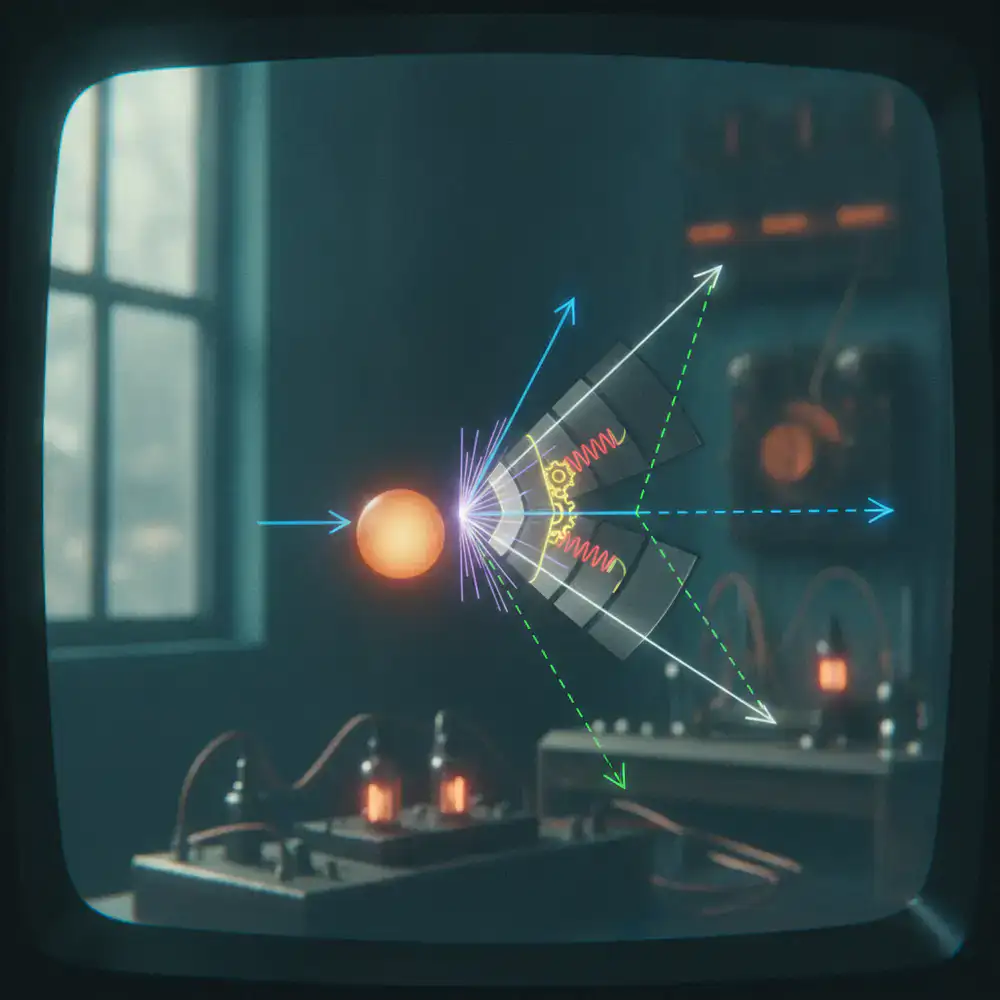
Physics Logic
The core of any great arcade sports game lies in its collision and trajectory calculations. We discarded generic physics engines to build a custom, deterministic system that ensures absolute precision for high-level play.
When the ball strikes the paddle, our logic calculates the rebound angle based on the exact point of impact and current paddle velocity. This grants players the ability to apply "spin" and sharply cut the ball's trajectory, rewarding high-skill maneuvers over blind luck.
Control Design
Arcade games live or die by their controls. A delay of just a few milliseconds can be the difference between a triumphant save and a frustrating miss. Our input loop operates independently of the rendering thread, polling player actions at ultra-high frequencies.
Analog Precision
Supporting analog sticks and touch-drag logic, the paddle mimics player speed flawlessly. Move slowly for a precise block, or flick quickly to smash the ball across the court.
Digital Snap
For keyboard and D-pad warriors, digital inputs instantly apply maximum acceleration, creating that sharp, classic 8-bit arcade feel without the sluggish wind-up.
Court Design
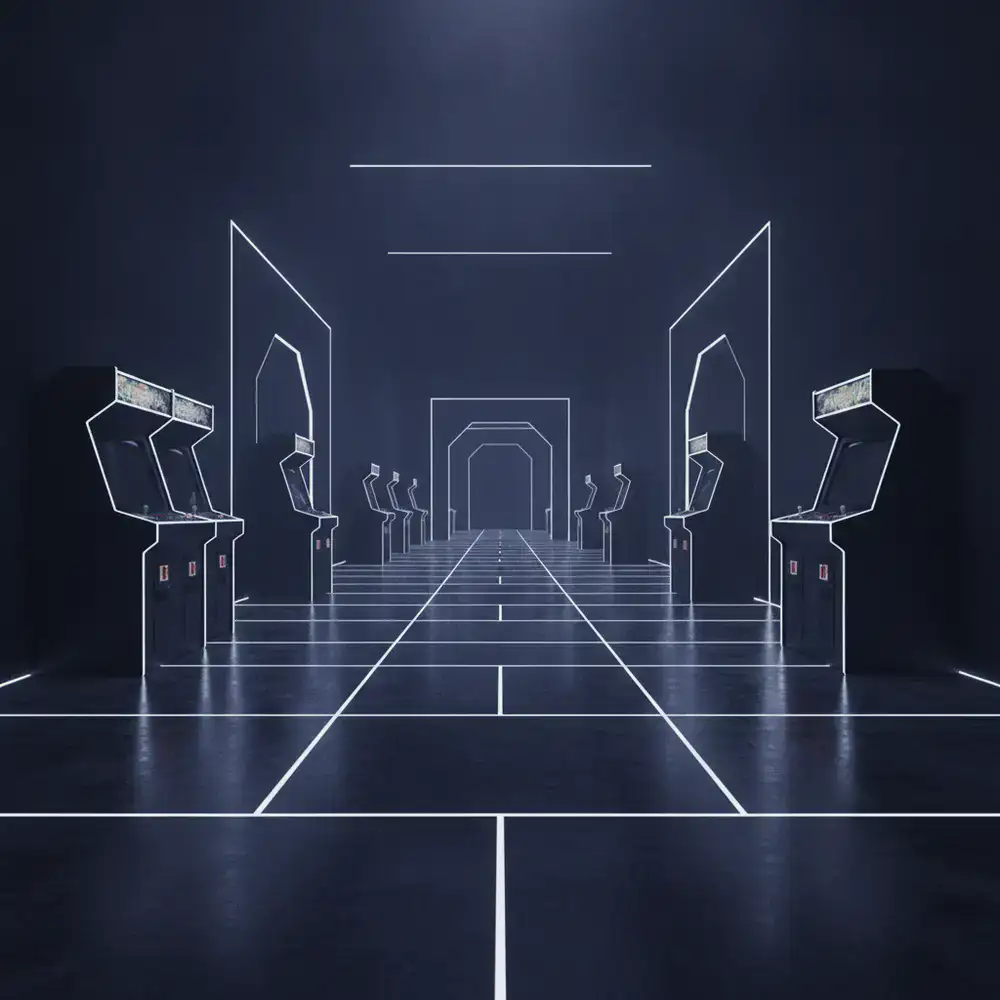
Our visual direction embraces the stark contrast of early arcade cabinets but modernizes the fidelity. The court is a deep, abyss-like dark surface designed specifically to make gameplay elements instantly readable.
- Pure black background rendering for striking contrast on modern displays.
- Stark, crisp white geometric boundaries ensuring pixel-perfect spatial awareness.
- Vibrant, trailing particle effects that highlight ball speed and impact severity.
Scoreboard
A scoreboard should be more than just numbers—it's the emotional anchor of the match. Our UI utilizes high-contrast cyan and indigo typography that dynamically scales, shakes, and glitches upon high-impact plays.
Behind the scenes, the scoring system connects directly to the game's state manager, allowing us to implement sudden-death rules, combo multipliers, and historic high-score tracking securely and instantly.
Difficulty Balance
Arcade games are infamous for "quarter-eating" difficulty spikes. We're taking a fair, progressive approach. Our CPU opponent uses a scalable behavioral tree rather than flat mathematical advantages.
The CPU deliberately miscalculates extreme ricochets, giving new players room to learn paddle momentum without immediate punishment.
As volleys grow longer, ball speed incrementally increases. The CPU's reaction time tightens, forcing players to adopt offensive rather than defensive play.
At maximum difficulty, the AI flawlessly predicts standard trajectories. Players must rely on edge-strikes and high-velocity spin to break its unyielding defense.
Want to talk tech?
If you're a developer, publisher, or arcade hardware manufacturer, our studio engineers are open to conversation.